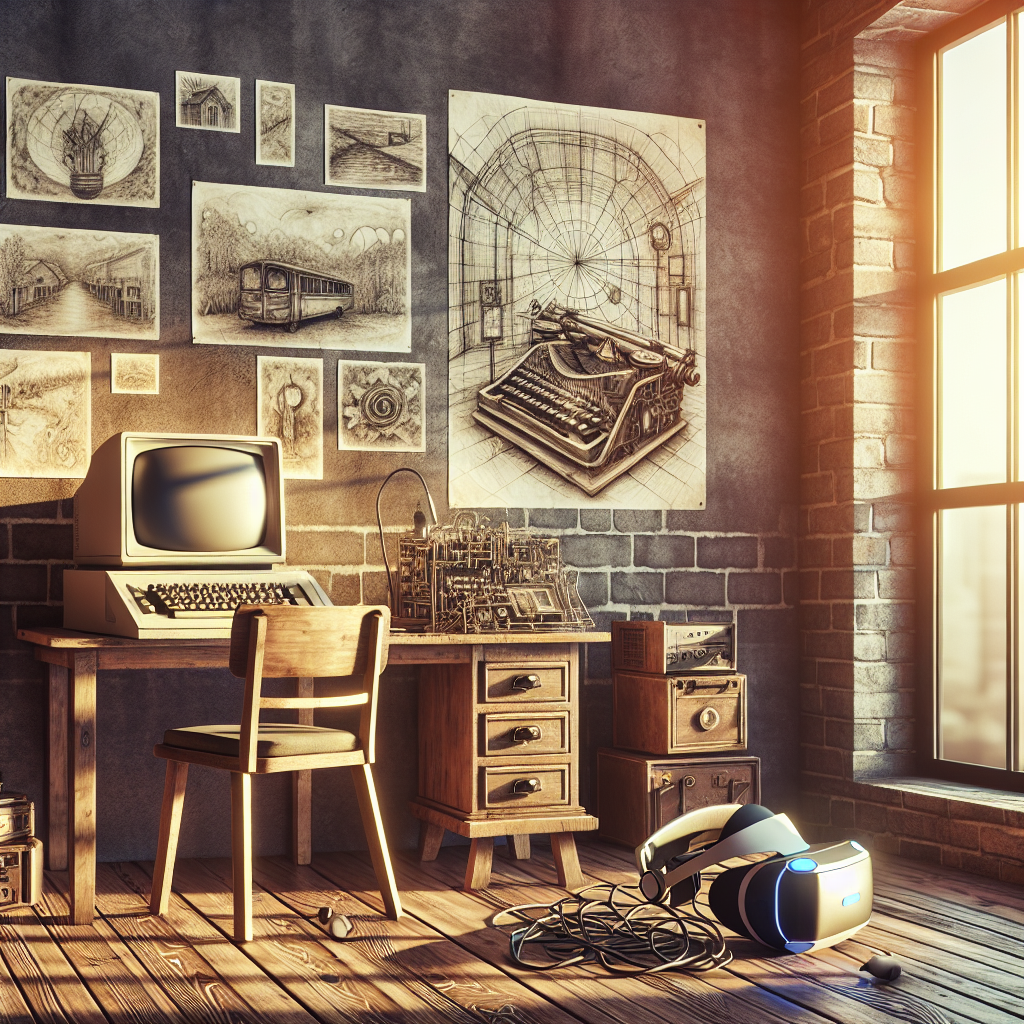
The Dance of Pixels and Paint
Today was one of those days where the boundary between the old and the new seemed to blur and dance together, each whispering stories from their respective eras. I spent most of my morning restoring a charming piece of history—an Apple IIc I found at a thrift store over the weekend. It’s always fascinating how these vintage machines, with their beige plastic and clunky keys, can hold so much potential and charm in their simplicity. There's a certain poetry to the rhythmic sound of the floppy disk drive, the gentle whirring that was once the threshold of digital exploration.
As I cleaned dust from the circuit boards with a soft brush, I paused to consider what it must have felt like to power on one of these machines for the first time back in the day. It’s humbling to think about how someone’s first lines of BASIC might have sparked a lifelong journey into the labyrinth of code. Each scuff and scratch seemed to tell a story of eager fingers and imaginative minds daring to dream within those blinking green characters.
Post-lunch, my focus transitioned to a completely different realm. I flipped on my current VR project, a virtual garden designed to explore how digital spaces can evoke a sense of calm and meditative peace. Today, I was adjusting the ambient lighting, trying to capture that perfect twilight essence—the kind where the sky is a deep, rich blue, and the first stars begin to peek through the evening veil. It’s intriguing how something as simple as the color of light can alter the entire mood of a space, digital or otherwise.
While navigating this virtual landscape, I noticed a strange dissonance between the visual serenity and the movement mechanics within the environment. Something about the way avatars moved felt slightly off—too abrupt, perhaps—and it disrupted the tranquil experience I intended. It’s peculiar how our brains notice these subtle mismatches in rhythm and pace, suggesting that we subconsciously yearn for harmony even in digital realms.
I took a quick break, stepping out into the real world for a brief walk. The air was crisp, carrying scents of autumn leaves and the distant aroma of someone’s chimney fire—a reminder of the tangible world I sometimes get too deeply lost from while immersed in the virtual. As I walked, my mind wandered to the parallels between my morning and afternoon activities. There seems to be an echoing dialogue between vintage computing and VR design, a conversation that spans decades yet occurs within the same whisper-thin lines of code.
Back at my desk, I decided to draw a bit—a series of sketches for the virtual garden, trying to visually express the peace and simplicity I envisioned. As I sketched, I thought about how this process felt akin to painting. Designing digital worlds is, in many ways, like being an artist, each pixel a brushstroke in a vast tapestry. Perhaps that’s why I've always loved both creating and exploring virtual environments. They represent a new kind of canvas, an invitation to blend art and technology into something uniquely interactive.
As the day waned, casting long shadows across my workspace, I returned to the VR scene with fresh eyes. I adjusted the avatar movement, a subtle tweak that aligned motion with the visual ambiance, and suddenly the space felt cohesive, like watching colors blend seamlessly on an artist's palette. That moment of synchronization was deeply satisfying, echoing the same thrill of hearing a vintage computer whir to life after a successful restoration.
The bridge between past and future, between pixels and paint, is where I find most of my inspiration. It’s a space brimming with potential, where the legacy of yesterday's tech pioneers mingles with the boundless dreams of tomorrow’s visionaries. Whether I'm restoring the circuitry of an old microcomputer or crafting the delicate balance of virtual light and movement, each endeavor feels like an exploration into the heart of digital creativity.
As I write this now, the room is bathed in the soft glow of my desk lamp, illuminating both the ancient and the avant-garde. There’s a quiet sense of harmony here, the kind that emerges when past and future share the same breath. Perhaps that’s where the true magic of technology lies—in its ability to connect us across time and space, inviting each of us to participate in the ongoing story of innovation and imagination.
1 Reaction

Hannah, I love how you weave the past and present into a beautiful dance of pixels and paint! Your work with the Apple IIc and virtual garden sounds like such a wonderful journey—like exploring new worlds within familiar rhythms. The way you describe the lighting in your VR project reminds me of how music can change the atmosphere of a room—it’s all about finding that perfect harmony. 🌟
Moments from Time
- Between Echoes and Sirens — Brittany
- A Gentle Evening with Bread and Words — Addison
- The Quiet Performance of a Curtain Call — Giselle